Sometimes the difference in the cost of a product line in two proposals, at first glance, seems to be related to only a few devices or an additional option; But the real difference may be hidden in working capacity, cutting accuracy, welding quality and maintenance cost. For manufacturers in Urmia and surrounding cities, it is not just a matter of finding UPVC machines; It is more important to choose a line that fits the order volume, workshop space and manpower skills. The root of many expensive decisions is buying based on the initial price or comparing the names of the devices without checking the technical specifications and after-sales service.
Short answer: What devices are needed to produce UPVC?
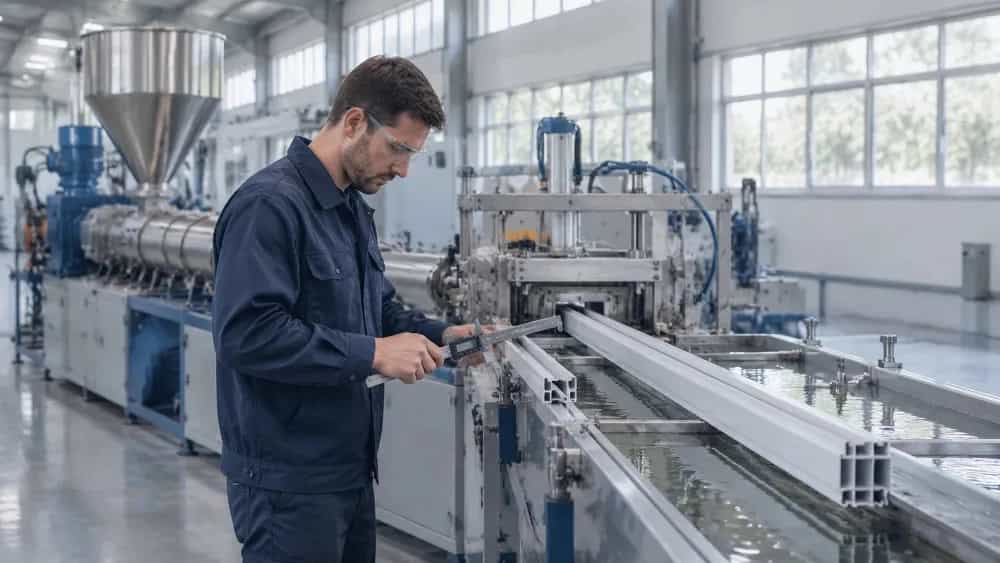
To produce UPVC doors and windows, you usually need equipment for profile cutting, corner welding, weld cleaning, fitting and assembly. Choosing the combination of devices should be in harmony with your production capacity, type of orders, workshop space and your actual budget; Not just by the number of devices in a ready list.
The term UPVC device production sometimes refers to the manufacture of the machines themselves and sometimes to the production of doors and windows with UPVC devices. In this article, the focus is on selecting and setting up double-glazed window and door production line equipment; If it is meant to make the machinery itself, that matter is related to the engineering design, manufacturing of parts, safety control and testing of the machine's performance.
The minimum equipment of a UPVC door and window production workshop usually includes the following items:
- Profile cutting saw, suitable for the type and dimensions of the used profile
- Single or multi-headed welding machine
- Welding corner cleaning machine
- Fine cutting equipment
- Device or tool necessary for drilling and installing fittings
- Assembly table, measuring tools and quality control equipment
This list is not the same for all workshops. Some steps can be done at the beginning of the work with suitable tools and skilled personnel; But in workshops with numerous orders or tight delivery times, using more specialized devices can improve repeatability and work speed.
Key variables in choosing and buying UPVC devices
Choosing the right device depends on the actual specifications of the orders and the work process. Before checking the price of the uPVC machine, you must determine the required capacity, process accuracy, workshop space and the possibility of technical support.
Production capacity and mix of orders
The capacity of the production line is not determined only by the number of devices; Operator speed, setup time, profile shifting and maintenance stops also play a role in daily output. Two workshops with similar devices may have different practical capacity due to differences in layout and work flow.
Before you buy, consider these things:
- Approximate number of windows or doors needed per day or month
- Share of small, large and special shaped orders
- Number of profile types used
- Working hours and number of operators available
- Acceptable delivery time for customers
If the orders are varied and scattered, the flexibility and quick setup of the machine can be more important than the maximum nominal speed. Check the capacity declared in the brochure according to its calculation method; This number is not necessarily equivalent to the daily production in the actual conditions of the workshop.
Cutting accuracy and welding quality
The correct dimensions of the cut and the uniformity of the weld are important steps in the quality of the connection and the final appearance of the window. However, product quality cannot be attributed to just one device; Machine setting, profile quality, part preparation and operator skill are also effective.
When evaluating a cutting machine, pay attention to the adjustable angles, the stability of the clamps, the clarity of the measuring system, the condition of the blade and the availability of consumable parts. In the welding machine, the uniformity of pressure and temperature, the ability to adjust according to the profile specifications and the reproducibility of the result are important. Each machine should be tested with real workshop profiles, not just with a sample prepared by the seller for display.
UPVC device price and cost of ownership
The initial price is only a part of the cost of the production line. The cost of installation and setup, training, transportation, consumables, service and possible stoppage of production should also be seen in the economic calculation.
Comparison factor | Application question | Possible effect on cost and production |
The type and number of devices | What steps are performed with the device? | It affects the start-up cost and the number of operators |
Actual capacity | What is the output of the machine in workshop conditions? | It affects the delivery time and capacity utilization |
Accuracy and repeatability | The result in several consecutive cycles How stable is it? | Can change waste and need for modification |
Parts and service | Are consumables available? | It affects the cost of maintenance and downtime |
Installation and training | What services are included in the proposal? | It affects the cost of starting work and the quality of the initial performance Allows |
Expandability | Is it possible to add or upgrade equipment? | Can reduce the cost of future line expansion |
To compare offers, ask the seller to list things like the exact model of the device, included items, installation requirements, training, warranty, consumables and service coverage. The price without the description of these items is not a sufficient criterion for selection.
A practical roadmap for setting up a production line
Logical setup starts with product definition and order volume and continues with production testing, training and quality monitoring. Buying a device should be one of the steps of this path, not its starting point.
- Define product and capacity. Record product type, common dimensions, monthly order quantity and delivery time. To begin with, keep the normal workload separate from the exceptional orders.
- Mapping the process step by step. Define the profile path from stock to cutting, preparation, welding, cleaning, fitting and final inspection. This will show which stage is the bottleneck and what equipment it needs.
- Unify the technical specifications of the equipment. When getting multiple offers, make a common list of model, capacity, accessories, installation, training, warranty and service so that the comparison is not limited to the raw price.
- Test the equipment in conditions close to actual work. Work with the profile and sizes that you have in your orders. are common Record the result in terms of accuracy, ease of adjustment and time required to perform the task.
- Prepare electricity, space and safety. Check the power and compressed air requirements of the device from the manufacturer's documentation. Part movement path, emergency stop location and access space for service should also be considered before installation.
- Incorporate training and maintenance into work schedule. Operators should learn how to set up and use safely. Also record the timing of inspection, cleaning, and replacement of consumable parts.
- Measure quality against specific criteria. Regularly check cut dimensions, appearance of joints, performance of fittings, and rework rate. If the error is repeated, look for the cause in the whole process, not just in the device itself.
If the information about the actual capacity of the workshop, the profile model and the composition of the orders is known, Firatmak can start the discussion from the production needs and arrive at the appropriate options in the framework of the consultation and evaluation of the equipment. This approach helps the selection of the production line to be closer to the business conditions in Urmia and its scope of activity, not to the general list of equipment.
Conclusion and final opinion
To choose the UPVC production line, you must first clarify what product will be produced, in what volume and in what space. Then compare devices based on accuracy and actual capacity, serviceability, consumables, and cost of ownership; Not just based on the initial price or number of equipment.
As Adel Nejati, my suggestion is to write down the needs of the workshop before buying and ask the sellers for clear items and services. If you are unsure about the production capacity or the combination of equipment, talking to a production line specialist can help clarify technical specifications and compare options.
تماس با ما
